What Bali's Hotel General Managers Really Think: AI, Destination Challenges, and the Road Ahead
Insights from an HSMAI GM Perspectives Roundtable Meeting Focus, April 2026
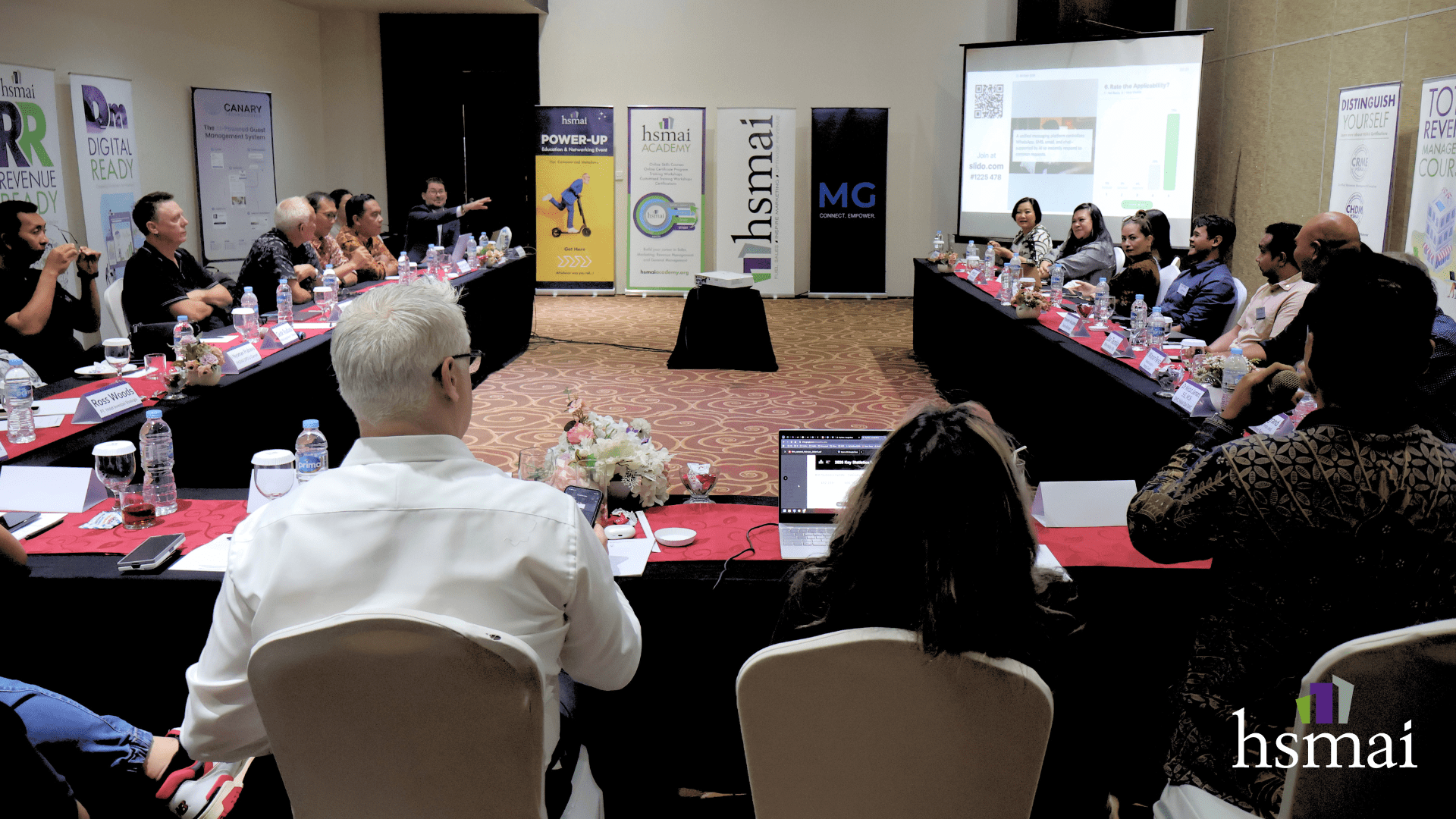
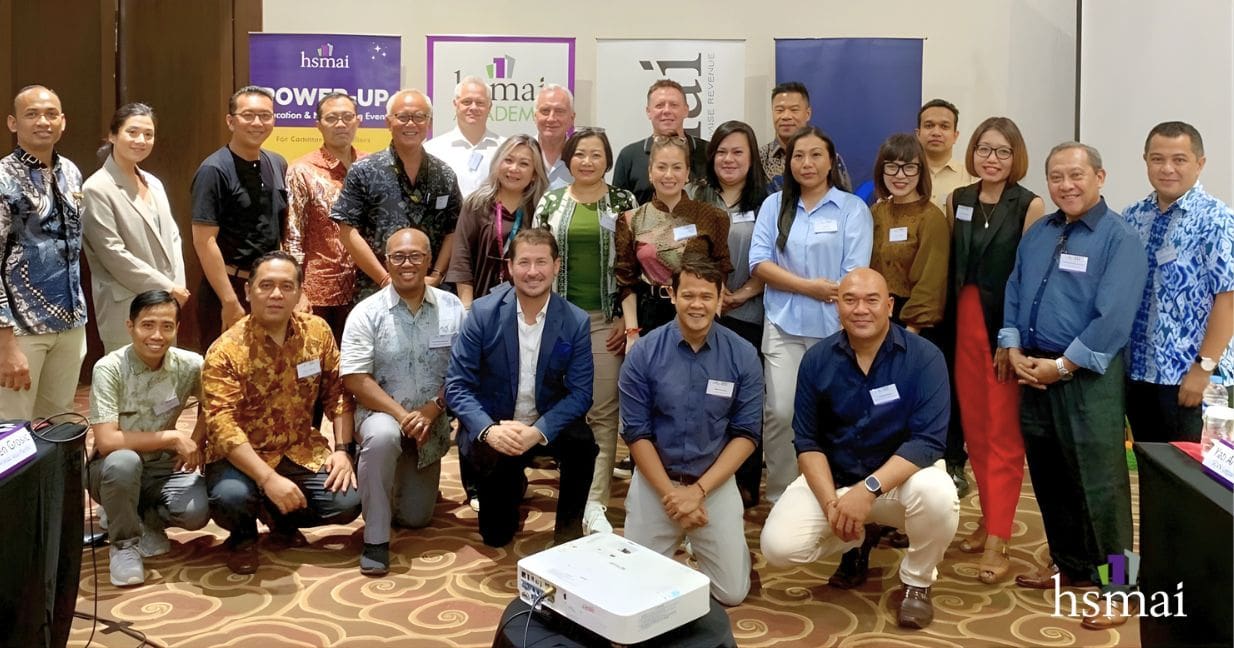
General Manager’s from Bali gathered for the HSMAI Asia Pacific Bali General Managers Luncheon & Roundtable Meeting in April 2026. The session was structured as an open, peer-to-peer exchange across three core topics. They were honest, and deeply revealing about the state of hospitality leadership in one of the world’s most iconic resort destinations. The topic discussions were facilitated by Bali Hotels Association, and supported by MG Group and Canary Technologies.
Three themes dominated the discussion: artificial intelligence and its practical role in hotels, Bali’s growing competitiveness challenges, and the volatile demand landscape reshaping how hoteliers plan for the future.
Closing Summary
Being a General Manager in Bali in 2026 requires a level of agility that the role has never demanded before. The leaders in that room are navigating AI adoption, destination reputation, regulatory uncertainty, and demand volatility — often simultaneously, and often without the resources that the challenge deserves.
What came through clearly, across all three topics, was a group of leaders who are engaged, thoughtful, and unwilling to simply wait for conditions to improve. They are looking for tools — technology, policy, community — that give them more time to do what they became hoteliers to do: look after people.
HSMAI will continue to document and amplify these perspectives as part of its ongoing commitment to connecting hospitality leaders with the insights and community they need to lead well.
AI in Hotels: Colleague, Not Replacement
The session opened with a simple but telling question: when you hear the word “AI,” what’s the first thing that comes to mind?
The answers were telling. Efficiency. Change. A new colleague. Adaptability. Not a single voice in the room said “threat” outright — though the undercurrent of uncertainty was present. One GM summed it up well: the role of a General Manager today looks nothing like it did ten years ago. Today’s GMs are expected to be commercial strategists, economists, cultural stewards, and sustainability advocates — all at once. AI, in this context, felt less like a disruption and more like a long-overdue resource.
The group worked through a series of real-world AI scenarios, rating each on its applicability to their properties:
Personalised Upselling — The idea of AI analysing a guest’s past behaviour to craft a tailored offer (say, a sunset cocktail and spa package instead of a generic room upgrade email) was met with near-unanimous enthusiasm. Most upselling at these hotels is still done manually. The potential for AI to do this at scale, overnight, without human intervention, resonated strongly.
AI Voice Assistants for Missed Calls — With Bali drawing guests from vastly different time zones, a missed call at 8:30pm often means a booking lost to an OTA. AI voice technology capable of answering calls, handling FAQs, and capturing enquiries around the clock earned a mixed but generally positive response. The key insight: it isn’t just for prospective guests — it extends to in-house guests needing quick answers and even post-departure follow-up.
Mobile Pre-Check-In — This scenario sparked one of the liveliest discussions. The idea of guests submitting ID and credit card details before arrival — freeing staff to stand in front of the desk, not behind it — was broadly welcomed. Concerns around data privacy, GDPR compliance, and guest demographics (Gen Z versus Gen X attitudes toward sharing personal data) added nuance, but the underlying principle was clear: AI-assisted check-in should offer choice, not mandate it.
Digital Guest Memory — A profile that surfaces a returning guest’s preferences — quiet room, late-night room service, sparkling water — for a new receptionist who’s never met them before. The potential to deliver concierge-level personalisation at scale was acknowledged, though the group was careful about where the line sits between attentive service and overstep. No one dismissed it outright.
Unified Messaging — Many hotels are managing five or more communication channels simultaneously: WhatsApp, email, SMS, OTA messaging, Facebook Messenger. The case for a single AI-powered platform to unify these was compelling. WhatsApp engagement rates were noted as significantly higher than email for leisure guests, and the idea of a centralised inbox supported by AI — with automatic routing and response — addressed a very real operational pain point.
AI-Powered In-Room Ordering — The final scenario — a guest simply speaking their order into the room and having it pushed directly to the kitchen — landed differently depending on hotel segment. For budget and midscale properties, seen as highly applicable. For upper-upscale and luxury, the view was more measured: human oversight of the order process still carries value at that price point.
Across all scenarios, one theme emerged repeatedly: AI’s role is to handle the administrative and repetitive so that staff can focus on what only humans can do — genuine, high-value connection with guests. As one participant put it, “hospitality without human service wouldn’t be called hospitality.” AI isn’t removing that truth. It’s trying to protect it.
One particularly compelling idea raised during the discussion: injecting local cultural identity into AI itself. One hotel had named its chatbot with a traditional Balinese name, creating a distinctly local personality. The vision of a “Balinese AI” — one that communicates with the warmth and character of the island — captured the room’s imagination.
A closing show of hands asked whether GMs believed AI would ultimately free them from the office and return them to the lobby, to the people, to the craft of being a hotelier. The result was nearly unanimous: yes. That hope — for technology to reverse the tide of endless reporting, KPI decks, and spreadsheet cycles — was consistent with findings from a similar HSMAI roundtable held in Bangkok weeks earlier.
Destination Competitiveness: Bali’s Bigger Problem
The second major discussion turned to Bali as a destination, and the mood shifted. The group reached a frank consensus: Bali’s single greatest competitive threat right now is waste management.
While the island’s culture, spirituality, and natural beauty remain deeply compelling, the visible presence of waste — particularly in public spaces and along coastlines — is undermining the destination’s premium positioning. Competing markets like Vietnam, Malaysia, and Thailand are not standing still, and Bali cannot rely on cultural cachet alone to maintain its market share in the resort segment.
The conversation also touched on the proliferation of unlicensed and unregulated accommodations — villas and short-stay rentals operating outside the formal hospitality framework. The view was consistent: this creates an uneven playing field, drives prices down across the market, and dilutes the experience standards that premium travellers expect. Recent regulatory moves to address this were noted with cautious optimism, though enforcement remains the critical gap.
Demand Volatility: The New Abnormal
The final and most sobering session focused on demand. If “new normal” was the phrase of the COVID era, one GM offered a sharper framing for 2026: “abnormal.”
Year-to-date arrivals from South Korea — historically one of Bali’s top five source markets — were down 15.4% as of February, following a government travel advisory. The Korean market’s tendency to respond swiftly and collectively to official guidance amplified the impact. The broader picture was one of compressed booking windows, softening long-haul demand, and rising geopolitical uncertainty weighing on traveller confidence.
The group debated forecasting methodology at length. The traditional deterministic approach — a single occupancy and rate projection — was called out as increasingly inadequate. One participant made a compelling case for probabilistic forecasting: instead of one number, a range of scenarios with assigned likelihoods, built from both data and the subjective expertise of the commercial team. In a world where a Thursday announcement can reshape travel flows, the ability to plan for variance rather than a point estimate is becoming a professional imperative.
Most of the GMs in the room had missed their Q1 budget. Several were re-forecasting weekly. The consensus was clear: the annual budget, as a planning tool, is losing relevance. Real-time, fluid forecasting — anchored in flight data, booking pace, and market intelligence — is what the business now demands.
On the demand recovery side, the group identified a structural opportunity: reducing over-reliance on long-haul Western markets and accelerating development of intra-Asia and domestic demand. Properties that had already diversified their source markets — with no single geography exceeding 10% of total business — were weathering the volatility with greater stability.
The question of rate integrity also surfaced. When larger properties discount aggressively, they pull the entire market down with them. Without coordinated rate floors — whether through industry agreement or government regulation — the risk of a race to the bottom remains real. One suggestion: engaging OTAs collectively as an industry body, rather than hotel by hotel, to negotiate promotional campaigns that protect rather than erode base rates.
For safety and security concerns — particularly given the Korean travel advisory — the group’s view was nuanced. Hotels are safe. That message needs to be communicated clearly, without language that inadvertently amplifies concern or draws attention to isolated incidents. Positive content, influencer campaigns, collaboration with local and national media, and proactive engagement with tourism authorities were all proposed as levers. The destination’s reputation is a shared responsibility — not just for the government, but for every property on the island.
Closing Thoughts
Being a General Manager in Bali in 2026 requires a level of agility that the role has never demanded before. The leaders in that room are navigating AI adoption, destination reputation, regulatory uncertainty, and demand volatility — often simultaneously, and often without the resources that the challenge deserves.
What came through clearly, across all three topics, was a group of leaders who are engaged, thoughtful, and unwilling to simply wait for conditions to improve. They are looking for tools — technology, policy, community — that give them more time to do what they became hoteliers to do: look after people.
HSMAI will continue to document and amplify these perspectives as part of its ongoing commitment to connecting hospitality leaders with the insights and community they need to lead well.
This article is based on a facilitated focus group discussion. All individual contributions have been anonymised in accordance with the session’s ground rules.