

Beyond Revenue: APAC Hotel Leaders Push for Smarter Commercial Integration
-
 Heidi Gempel Managing Partner & Founder at HGE International & Facilitator HSMAI Commercial Advisory Board
Senior hospitality commercial leaders across Asia Pacific are signalling a shift in how hotel organisations will approach growth, profitability, leadership, and commercial strategy in the years ahead.
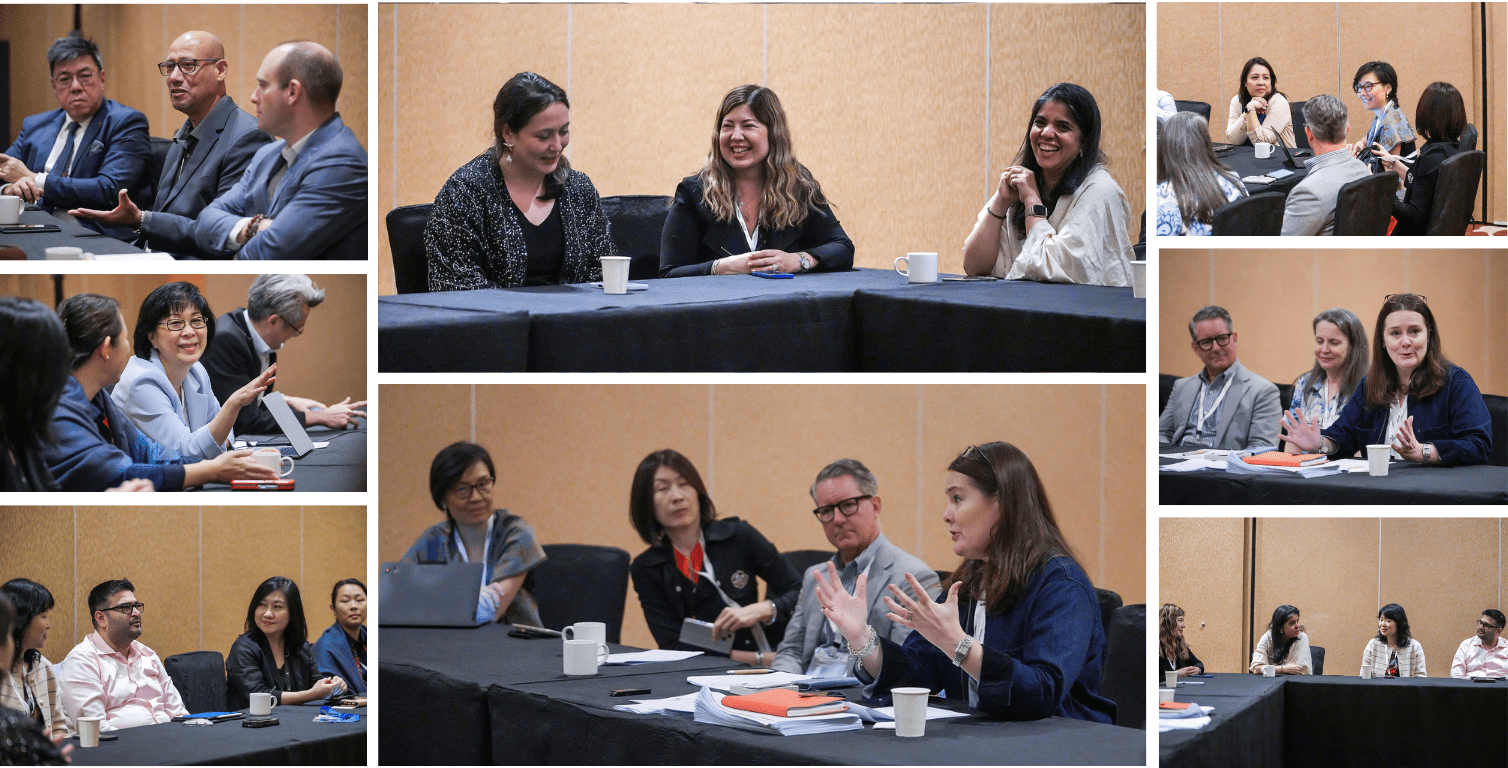
During the recent HSMAI Asia Pacific Chief Commercial Officers Roundtable, industry leaders discussed the growing complexity facing hospitality businesses — from commercial integration and profitability pressures to AI adoption, talent capability gaps, and changing market dynamics across the region.
The discussion reflected a broader trend now emerging across Asia Pacific: commercial leadership is becoming increasingly interconnected, strategic, and operationally influential.
According to the JLL APAC Hotel Operators’ Sentiment Survey 2025–2026, hotel operators across the region remain cautiously optimistic, although performance patterns are becoming increasingly uneven between markets, segments, and destinations. JLL’s Asia Pacific Hotel Market Dynamics Q4 2025 report noted that “divergence in performance continued” across the region as recovery patterns evolve at different speeds.
For many commercial leaders, this growing complexity is reshaping the role itself.
Traditionally separated disciplines such as revenue management, sales, marketing, distribution, loyalty, and digital strategy are increasingly being consolidated under broader commercial leadership structures. Participants noted that today’s commercial leaders are no longer focused solely on driving occupancy or topline revenue, but are increasingly expected to align profitability, guest experience, commercial performance, and long-term asset value across the business.
One of the strongest themes emerging from the discussion was the industry’s growing focus on profitability rather than pure revenue growth.
While many APAC markets continue to see stable demand and ADR performance, leaders acknowledged that rising operational costs, distribution expenses, labour pressures, and acquisition costs are forcing hotel organisations to look beyond traditional RevPAR-focused performance models.
The discussion reinforced a growing belief that the next evolution of hospitality commercial strategy will focus more heavily on total business performance rather than rooms revenue alone.
This was particularly evident in conversations surrounding luxury resorts and destination-led hospitality businesses, where restaurants, wellness, experiences, events, and ancillary revenue streams increasingly play a major role in driving both profitability and guest demand.
Supporting this shift, the JLL APAC Hotel Operators’ Sentiment Survey 2025–2026 found that approximately three in five APAC hotel operators remain optimistic about food and beverage performance heading into 2026 — reflecting the growing importance of non-room revenue streams within the hospitality business model.
Participants discussed how many hotel organisations still operate with fragmented structures where rooms revenue, food & beverage, spa, and events remain managed separately despite increasing guest expectations for integrated experiences.
As a result, Total Revenue Management continues to emerge as one of hospitality’s largest untapped commercial opportunities.
Talent and leadership capability also featured prominently throughout the roundtable discussions.
As commercial disciplines continue to merge, participants highlighted growing demand for leaders capable of combining strategic thinking, stakeholder management, operational understanding, analytics, and cross-functional collaboration.
Many noted that while hotel operations has traditionally benefited from structured leadership pathways, hospitality still lacks clearly defined development frameworks for future commercial leaders.
Artificial Intelligence was another major topic, although discussions remained firmly grounded in operational reality rather than industry hype.
Participants shared examples of AI already being used to support forecasting, reporting commentary, market analysis, and administrative automation — allowing commercial teams to reduce manual workload and focus more heavily on strategic decision-making.
Rather than replacing commercial expertise, leaders largely viewed AI as an efficiency enabler that could improve decision support, productivity, and organisational agility. Recent regional reporting from ITBrief Asia on AI adoption in hospitality similarly highlighted how hotels across Asia Pacific are increasingly adopting AI and automation to improve efficiency, distribution performance, and commercial effectiveness.
The roundtable also explored the growing importance of collaboration across the broader hospitality ecosystem, including stronger partnerships between hotel groups, technology providers, universities, startups, and industry associations.
Several participants discussed opportunities for hospitality organisations to become more active innovation environments where emerging technologies, commercial ideas, and operational solutions can be tested in real-world settings.
Across all discussions, one message remained consistent: hospitality organisations across Asia Pacific are entering a period where adaptability, integration, and commercial agility will become increasingly critical to long-term success.
As market conditions continue to evolve, the role of the commercial leader is rapidly expanding beyond traditional departmental boundaries. Increasingly, success will depend on how effectively hospitality organisations align commercial strategy, operational delivery, guest experience, and profitability into a single integrated business approach.